“Philosophy” as designated in the western traditions and “Darsana” as designated in the Indian philosophical tradition are terms used to designate the field of philosophy. The subject of inquiry here is what exactly is it that the philosophers in both the traditions meant/mean by the use of the term philosophy? Whatever the pioneers in both the traditions meant, they most certainly did not mean Philosophy to be what it has come to be, an “institutional subject”, like any other discipline with a scientific aspiration to the objective truth or truth with a “ T “.
By following the institutional ways of reading and studying philosophy all we can aspire to become are historians of a subject called philosophy and not philosophers, because all we do at the institutions is the history of philosophy, the interpretations by various professors of the philosophical thought of the various philosophers down the history of man’s mind. All we are taught are the similarities, comparisons, criticisms, and of course the life of the philosopher himself. Why is this important to a question that has been inquired into for many thousands of years now? It is important because philosophy as a subject has been distorted from its original place, which is within man and not in the institutions.
Philosophy in both the traditions is concerned with worldviews, views about life and its connotations in every sphere of existence. Philosophy down the ages has successfully stood up against the well rooted conventions, superstition, and customs and the prevalent “way of thinking and looking at the world” i.e. the world views of different sets of people. But, most importantly it has enabled man to come out of his old worldview, metamorphosing it in to a higher spiritual plane of existence. Philosophy for the ancients was of a therapeutic value and not just a profession; it was a “way of life”. The ancient philosophers sought to give meaning to their lives through the practicing of what they thought was good and at the end of the day trying to find a better thought to live by. It was the noblest way that they thought they could live by.
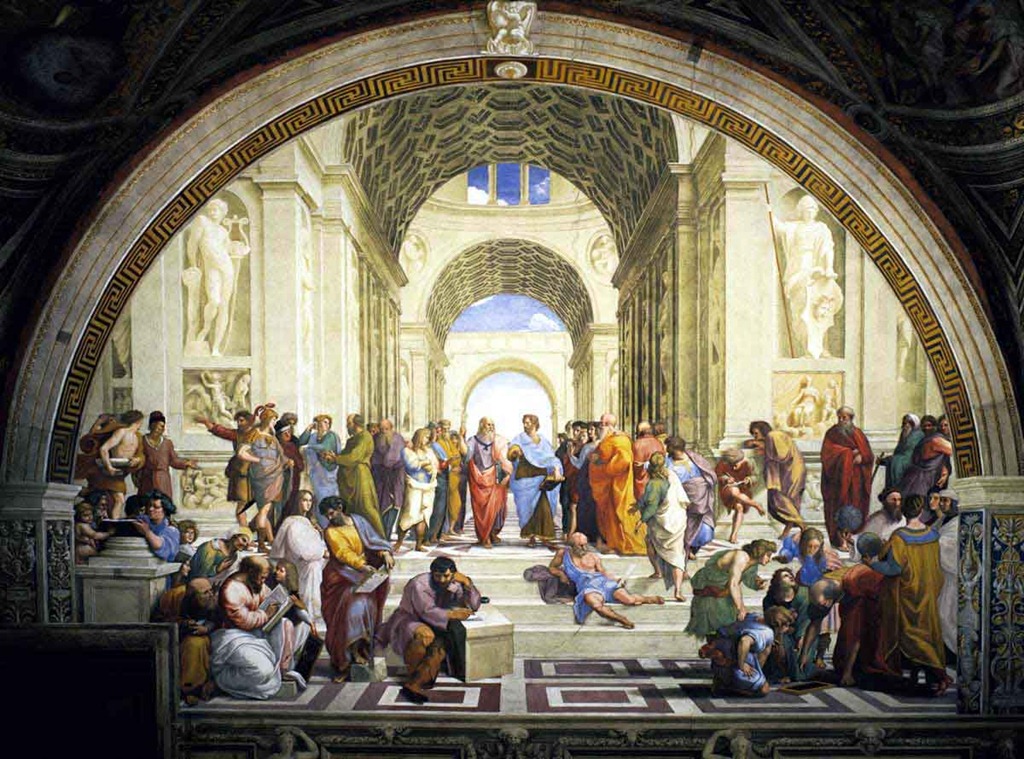
Among the ancient philosophers Socrates was the one who taught his contemporaries that philosophy was not about the philosophical doctrines but a lived experience. It was not a collection of logically correct proposition to be passed on from teachers to pupils, but, that it was a manner of being, communicated through dialogue. This way of life has to be the work of each individual who has the love for the truth, truth here is not the truth with a “T”, but on the contrary truth that works for you the subjective truth that you embrace to lead your life with passion and zeal for living it. This zeal to live a philosophical life comes from within the individual self, once awakened it has to be renewed and fed with self-examination, self-criticism and self-awareness. This then has to become regular habit for the rest of one’s life, the practice of which will lead to a self-conscious way of life. An individual raises himself by this “spiritual exercise” up to the life of an objective spirit i.e. he raises himself to a higher plane of a spiritual living, relocating himself within the whole.
This is primarily what the ancient philosophy aimed at, training people to have careers as human beings. They understood well that just being born human was not enough but to live a life supported by experience through dialogue was being human.
But, after philosophy entered the institutions and their libraries it wearied out as a way of life. It became a relic that was to give the next generation a means to support their existence, how did it now matter whether they lived a life in philosophy or otherwise? The age of professors and professional philosophers arrived in which the study of philosophy could only get them to become clerks or professional philosopher whose sole work was to instruct theoretically the doctrines of the ancients, briefly mentioning practice of philosophy to be a “historical phenomenon”. As if they were relevant only at that particular juncture in history . They had stopped living a philosophical life and having now consigned practical philosophy of the ancients to historical relic, traded it for the institutes making the subject wholly theoretical and rigorous. A subject that was meant for every one born human now became the property of some individual consigning all others to oblivion.
With the coming of Christianity philosophy became the property of the church which give it authority as sacred, knowledge which was practiced through dialogue in the ancient time now came to control all the beings the focus of which became God and his existence. Philosophy from the 5th century A.D up to the 18th century (from Thomas Aquinas up to Kant) maintained this focus. It became an axis of power for the state to control. What the ancients had thought to live for we now live by. Philosophy once understood as a practice of the spiritual exercise mediated by discourse has been ruptured by the historical development has become a nightmare from which the west is trying to awake .It is of urgency that we acknowledge this rupture and then consciously try and relocate it to its ancient from “as a way of life”.
In the Indian philosophical tradition too, the aim of the people practicing a philosophical existence was to live in a higher form of existence the end of which was ‘Moksha’ or liberation. The Indian philosophers understood life to be an existence in miseries and pain, suffering and the angst of death. For them the location and understanding of the self was of a major concern, though this inquiry took a rigorous form in the doctrines of the Upanishads, the self as an object of philosophico-religious speculation is conspicuous in the most ancient literature of India (The Vedas BCE 1500-800) only by its absence. It piquantly makes its emergence in the atharva Veda in the text called Brahmana. Their aim to achieve the ideal of “Moksha” was not through philosophical speculation but by the practice of life regulated by philosophical ideals.
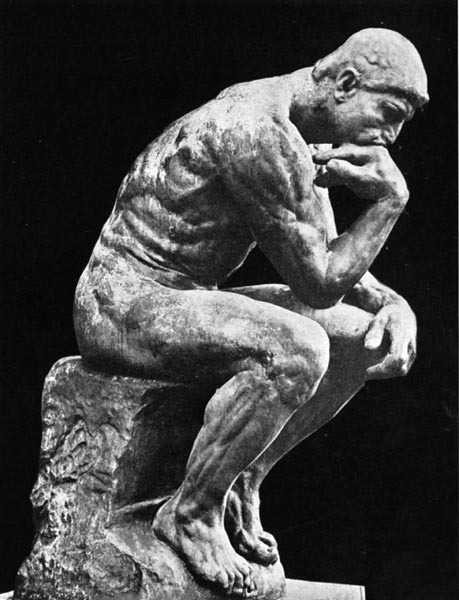
The Buddha recognized life to be full of suffering and misery, the therapy of which was for him meditation and right living. Here philosophy can be seen as a way of life to which the Buddha subscribed and taught the people the method of achieving the ideal, the pratayasamutpada (the theory of dependent origination), and the four noble truths followed by the eight-fold path. All the doctrines that the Buddha taught were and are empty and of no importance without ‘praxis’. For him it was a way of living that moved us closer to the ideal of “Moksha”, cessation of suffering thereby following. The Buddha lived a life of conscious self-awareness of the temporary and ever changing momentariness of existence and this world.
Even in the twentieth century there are two personalities who took philosophy to have a therapeutic value and lived it as a way of life. One is from India and the other from Europe. Mohandas karamchand Gandhi was a man who had a conscious existence to the truths he sought to pursue. He demonstrated to us that the truth is not something that will reveal itself to us, but that we have to go and locate the truth for ourselves. In other words he had the notion of the subjective truth as opposed to the objective truth with a capital “T”. And this he did by showing us that the practice of “satyagraha” or passive resistance, which is characterized by non-violence, could achieve goals of any proportions against the suppressors of the suppressed. It was a practice that showed us not how far the oppressors could go to commit the evil on the oppressed but that how much the oppressed take it as evil .It was the strength of the satagrahi, staging a nonviolent resistance that was to be tested.
The second figure was Ludwig Wittgenstein an Austrian philosopher who taught at Cambridge. His father was one of the richest businessmen in Austria, but when Wittgenstein inherited his father’s wealth he quickly gave all of it away to charity and his family members. He then went on to Norway, built himself a hut and stayed there in absolute solitude and minimalism, coming briefly to Cambridge. It was here that he wrote his magnum opus ‘The Philosophical Investigations’. He himself said of his philosophy that it was of use only as a therapy. Even he denied that there was an objective truth. He demonstrated a life of philosophical existence with the way he lived. After his death he came to be called “The philosopher’s philosopher”. It was because of the passion he had for transforming life by a philosophical practice as a way of life that he achieved his works.
What started off as philosophy as a way of transforming a man’s life has now just become a subject dedicated to theoretical speculation, a subject dedicated to examining the arguments logically, and setting up of new disciplines within the subject. If philosophy is understood to be a spiritual exercise supported by theoretical speculation, the aim is to change the point of view of mankind against certain attitudes. It is an attempt to make the world a better place to live in, while recognizing each person’s individuality and respecting his personal space and freedom.
The aim is to train people to look at the world and reality as a whole. It does not try and subjugate a man to be a slave to certain established norms, but attempts at the regular transformation of the individual. It is not a “once” process but an ongoing process till we reach the end of our existence. A life in philosophy can be best compared to that of the work of a painter, who paints a portrait not once but till the time he achieves a masterpiece. We at the end of our lives should aspire to achieve this ideal of being a masterpiece when we become a trace in the history of mankind.

 Vidyut Jain's Blog
Leave a reply to Hassnain Cancel reply